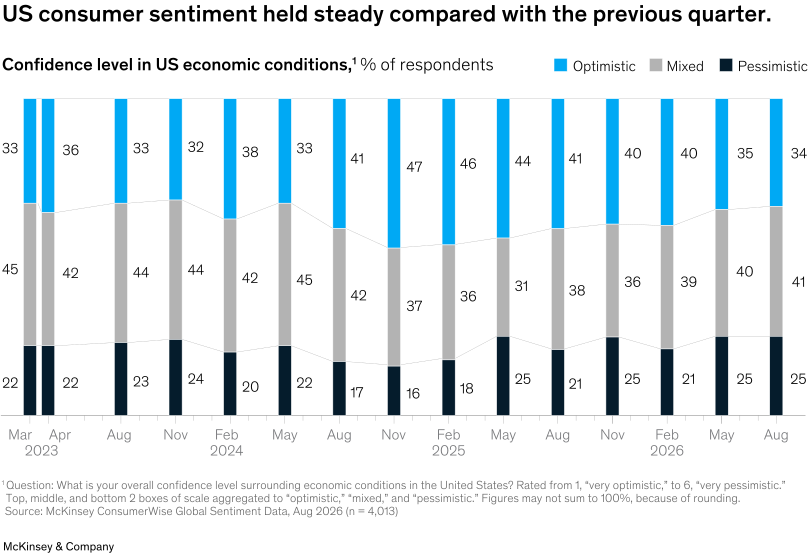
It may still be summer, but for many US consumers, holiday shopping has already begun—and they’re heading into the season less optimistic than they were a year ago. As they search for the right gifts at the right price, many plan to use AI tools to compare products, find deals, and get gift ideas.
The following charts present insights from our latest ConsumerWise research, conducted through late July and early August, exploring US consumers’ feelings about the economy in the third quarter of 2026 and their plans for the holiday shopping season.
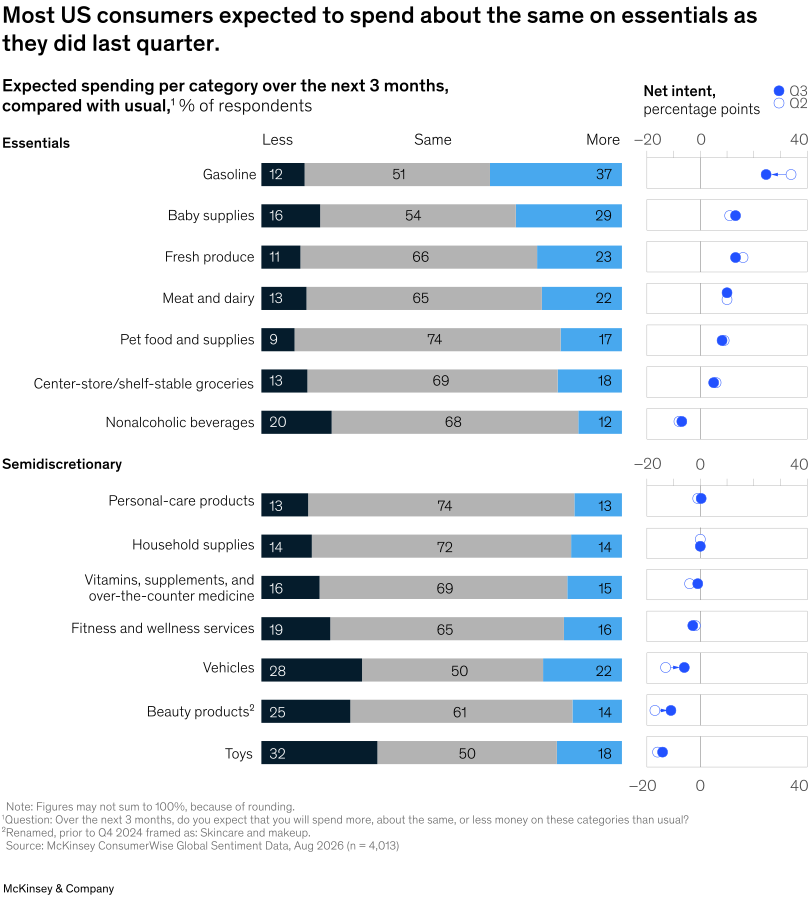
US consumers expected to maintain steady spending across nearly all essential and semidiscretionary categories over the next three months, though spending intentions varied by category. Net spending intent1 was highest for gasoline, at 25 percent, followed by baby supplies and fresh produce, both at 13 percent. By contrast, the lowest net intent (–14 percent) was for toys.
Net spending intent for gasoline also declined more than for any other category compared with the previous quarter. The decline coincided with a period of renewed volatility in fuel prices. After easing in June, pump prices rose again in July amid escalating conflict in the Middle East.2
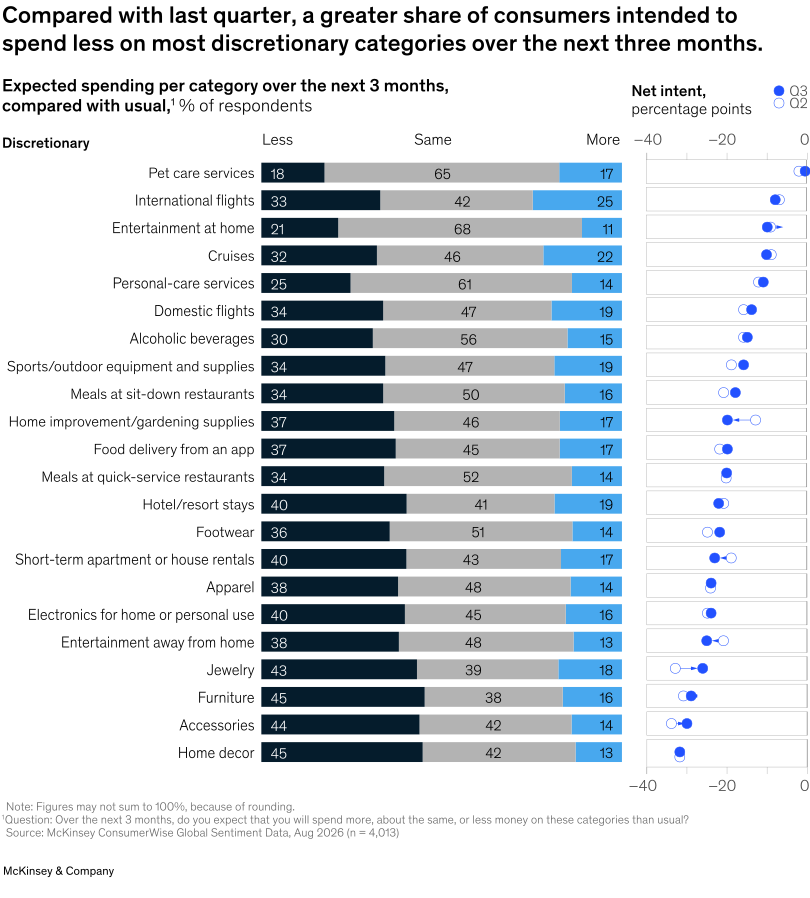
Consumers reported plans to pull back across a broad range of discretionary purchases. Of the 22 categories in our survey, pet care services was the only one with net spending intent at zero or above; every other category was negative. Net intent was lowest for home decor (–32 percent), followed by accessories (–30 percent) and furniture (–29 percent).
The pullback extended to categories that typically see a seasonal lift at this time of year. Compared with last year, net spending intent dropped much more for apparel (–24 versus –1 in 2025), footwear (–22 versus –4), and electronics for home or personal use (–24 versus –6), even as the back-to-school shopping season—historically a driver of demand in these categories—was underway. This pattern echoes broader industry findings that per-shopper back-to-school spending intentions were down this year, even as total category spending was projected to rise on higher prices.
The pattern was also evident in travel and dining: net spending intent was –22 percent for hotel and resort stays, –20 percent for food delivery, and –18 percent for meals at sit-down restaurants. Quarter-over-quarter changes were modest for most categories, suggesting discretionary restraint persisted rather than intensified.
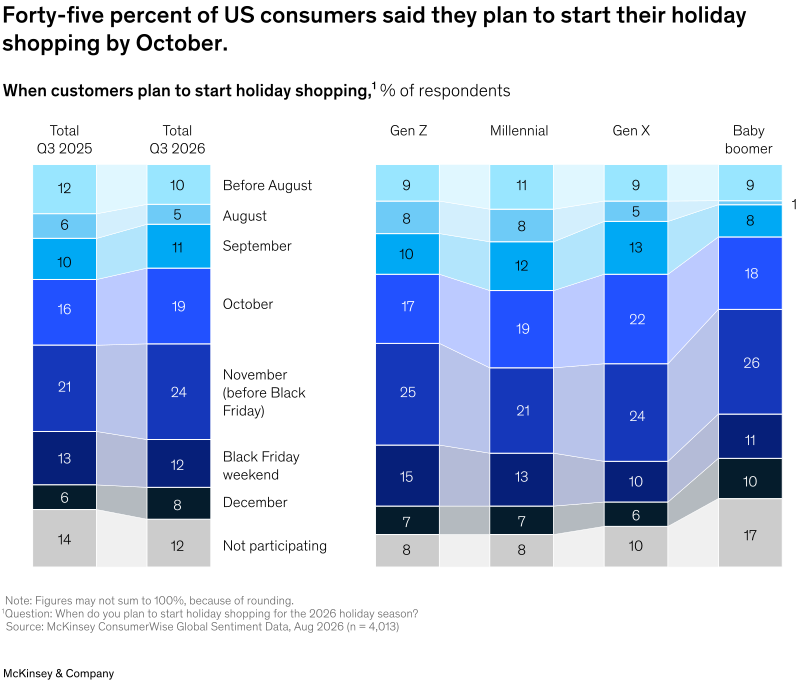
US consumers said that they would do their holiday shopping gradually throughout the fall. Ten percent said they had already started shopping when surveyed, while 5 percent planned to start in August, 11 percent in September, and 19 percent in October. In total, 45 percent of respondents said they expected to have started by the end of October.
“November (before Black Friday)” was the single most commonly selected starting point, chosen by 24 percent of respondents—outpacing Black Friday weekend itself, selected by 12 percent. Overall, the share of US consumers planning to start their shopping by October was slightly lower than it had been a year earlier.
Based on these data, retailers should ramp up their inventory, staffing, and promotions well before Black Friday. Targeting strategies should also vary by generation: Millennials may respond to marketing communications earlier in the holiday shopping season, while baby boomers—who are nearly twice as likely as younger generations to skip holiday shopping entirely—may need to be persuaded to shop in the first place.
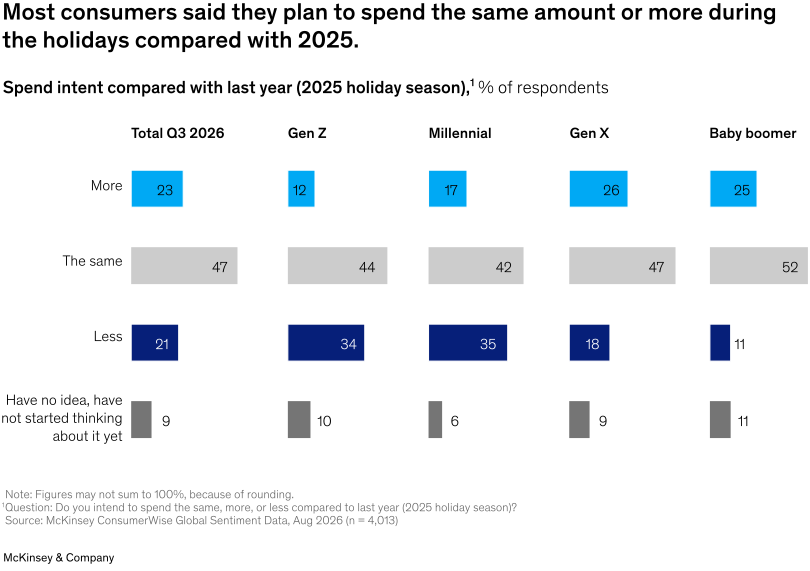
Nearly half of respondents (47 percent) said they planned to spend about the same amount during the 2026 holiday season as they had the year before. Another 23 percent planned to spend more, while 21 percent planned to spend less. Nine percent said they did not yet know how much they planned to spend.
Spending intentions diverged by generation. Gen X respondents were the most likely to plan to spend more, at 26 percent, compared with 17 percent of millennials and just 12 percent of Gen Z respondents. The opposite was true for plans to spend less: 34 percent of Gen Z respondents and 35 percent of millennials expected to cut spending, compared with 18 percent of Gen X respondents and 11 percent of baby boomers. At the same time, a higher share of Gen Z and millennials reported feeling more optimistic than the cross-generational average—37 percent and 43 percent, respectively, versus 34 percent overall, which could indicate that younger consumers are tightening their belts even as they feel slightly more upbeat.
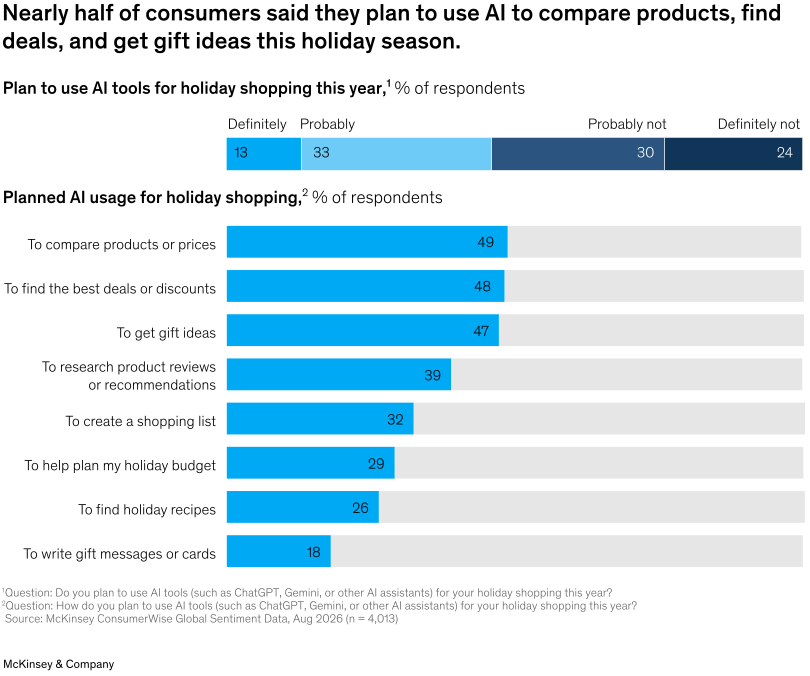
AI is becoming part of consumers’ holiday shopping plans. Nearly half of respondents (46 percent) said they would definitely or probably use AI tools for holiday shopping, compared with 54 percent who said they probably or definitely would not.
Among likely AI users, the leading use cases centered on comparison and value: 49 percent planned to compare products or prices, 48 percent planned to find deals or discounts, and 47 percent planned to get gift ideas.
As AI becomes a more integrated part of the consumer decision journey, consumer business should focus on optimizing product listings for the fast-evolving world of generative engine optimization (GEO) to ensure their products appear in AI search results. Pricing consistency across channels will also matter, since AI tools that draw from frequently updated data can surface outdated or conflicting prices, which could deter consumers from making a purchase.
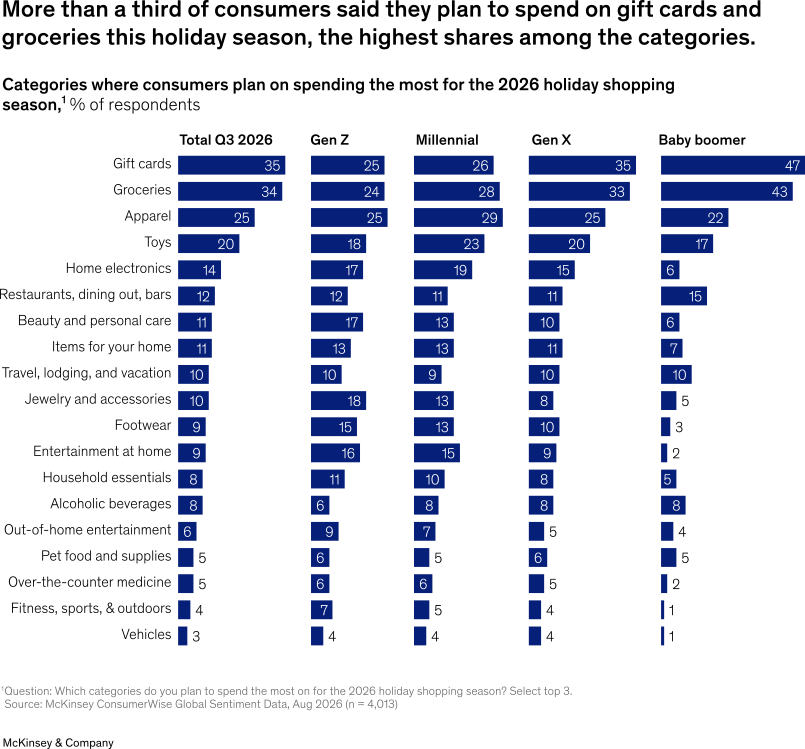
Consumers said they plan to concentrate their holiday spending in a relatively small set of categories. Just like last year, gift cards ranked first, selected by 35 percent of respondents as one of the three categories where they planned to spend the most. Groceries and food for home followed (34 percent), while apparel ranked third (25 percent) and toys, fourth (20 percent).
Baby boomers were most likely to say they would spend on gift cards, a pattern that held for groceries as well. Gen Z respondents stood out for comparatively greater planned spending on beauty and personal care, jewelry and accessories, footwear, and entertainment at home, while millennials overindexed on apparel and electronics.
For retailers and consumer businesses, the opportunity this holiday season is about capturing a greater share of tighter budgets. Shoppers are pulling back on discretionary categories yet holding holiday spending steady, rewarding brands that offer clear value and relevance. With most shopping starting well before Black Friday, readiness—inventory, staffing, promotions—matters earlier. And with nearly half of consumers planning to use AI to compare prices, find deals, and generate gift ideas, discoverability now extends beyond the shelf. Companies that make their products and prices easy for AI tools to understand will be better positioned to influence AI-assisted decisions—and stay top of mind with holiday shoppers.
To contact us for more information or to read additional insights, check out our ConsumerWise page.
About the Authors
Anna Pione is a partner in McKinsey’s New York office, Christina Adams is a partner in the Dallas office, and Thomas Kilroy is a senior partner in the Chicago office.
The authors wish to thank Andrew Pitakos, Karina Huerta, and Tom Skiles for their contributions to this article.
This article was edited by Alexandra Mondalek, an editor in the New York office.
An update on US consumer sentiment: Holiday budgeting begins
By Christina Adams, Kari Alldredge, and Thomas Kilroy
Ahead of the summer season, a smaller share of US consumers reported optimism while a greater share reported cost concerns, which could impact their spending across discretionary categories. Here’s the latest research from our ConsumerWise team.
In the second quarter of 2026, US consumers faced uneven hiring, rising inflation, and ongoing geopolitical tensions. Against that backdrop, a smaller share of consumers reported feeling more optimistic about the economy, while a greater share said they felt pessimistic. Consumers also reported intentions to pull back spending across most discretionary categories. The pullback was most pronounced among low-income consumers, though even higher-income consumers said they may cut back on “nice to haves.”
The following charts present insights from our latest ConsumerWise research, completed in early May. The survey explores how US consumers adjusted their priorities in the second quarter of 2026.
The share of US consumers who said they felt optimistic about the economy declined by five percentage points to 35 percent, while the share of those reporting pessimism increased by four percentage points. This represents the biggest quarterly drop in optimism and the lowest share of consumers who reported feeling optimistic in two years.
There were nuances across income groups. Lower-income consumers, who were already the most pessimistic group heading into the quarter, remained so. High- and middle-income consumers, meanwhile, reported the largest declines in optimism. As for generational differences, more baby boomers and millennials felt pessimistic this quarter compared with the previous one, while fewer felt optimistic.
My parents just don’t get it. They own their home, and their cars are paid off. For me, I’m juggling student loans, rent, and just trying to build a savings account feels impossible. We’re living in different worlds.
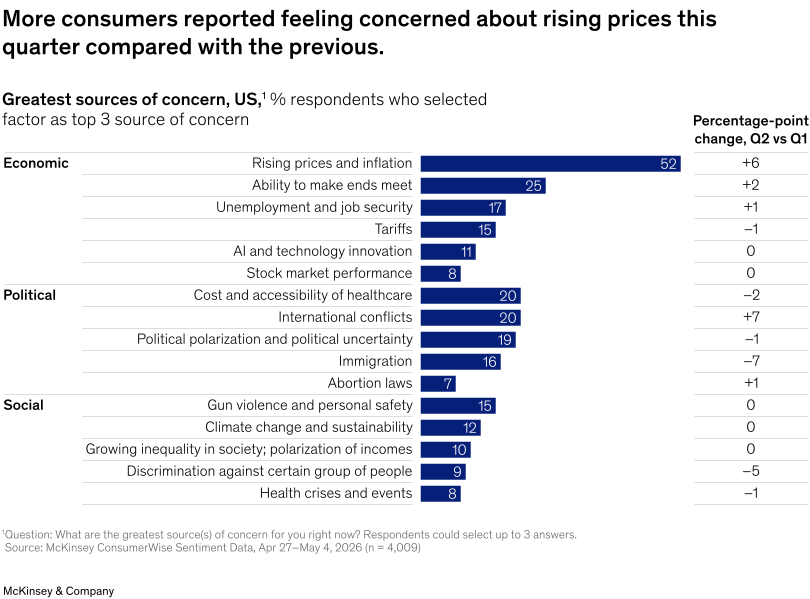
Consumers reported that concerns about the cost of living continued to dominate their outlook. Rising prices remained the most frequently cited concern, increasing by six percentage points from the previous quarter to 52 percent of consumers, while concerns about the ability to make ends meet also rose. (The largest quarterly increase in consumer concern was about international conflicts, rising seven percentage points from the previous quarter, though only 20 percent of respondents ranked this factor among their top three sources of concern.)
Consumers who reported difficulty covering everyday expenses—such as groceries or bills—were significantly more likely to express pessimism about the economy. Lower- and middle-income consumers were significantly more likely to cite the ability to make ends meet as a top concern, while this issue was far less prominent among higher-income consumers.
Concern about job security revealed an even sharper divide. Gen Z consumers reported a significant increase in unemployment anxiety and were nearly ten times more likely than baby boomers to rank it as their top concern. Lower-income consumers were more than twice as likely as higher-income consumers to cite unemployment as a primary worry.
Not all concerns weighed equally on consumers’ economic outlook. While cost-of-living pressures and income-related issues were strongly linked to pessimism, other topics—such as technology or broader macro concerns—showed little to no relationship with consumer sentiment.
We’ve had to make some tough choices. The family vacation is on hold, eating out is a rare treat, and I can’t remember the last time I bought something just for myself. It’s all about needs, not wants, right now.
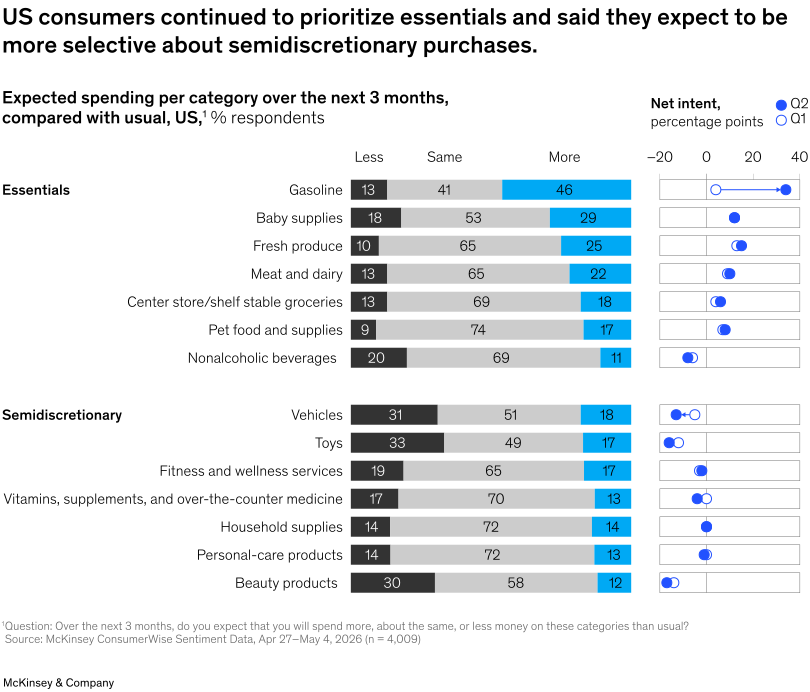
Consumers’ intent to spend remained stable or increased modestly across core categories such as groceries and household goods, with one major exception: gasoline. Net intent1 to spend more on gasoline increased 30 percentage points from the previous quarter—unsurprising given the recent rise in gas prices.
With regard to how consumers are managing their expenses, millennials reported the highest use of credit cards to cover essential expenses as a financial coping mechanism (34 percent), higher than both Gen Z (27 percent) and baby boomers (22 percent). Gen Z consumers, meanwhile, reported greater financial strain: 31 percent said they had cut back on grocery spending, and 23 percent reported that they had skipped payments or underpaid bills.
The cost of fuel is astronomical. I am very conscious about how often I drive. I try to get everything done in one trip instead of multiple trips. … And at home with the cost of electricity and gas—turning up the thermostat during the winter and turning it down in the summertime to try and save.
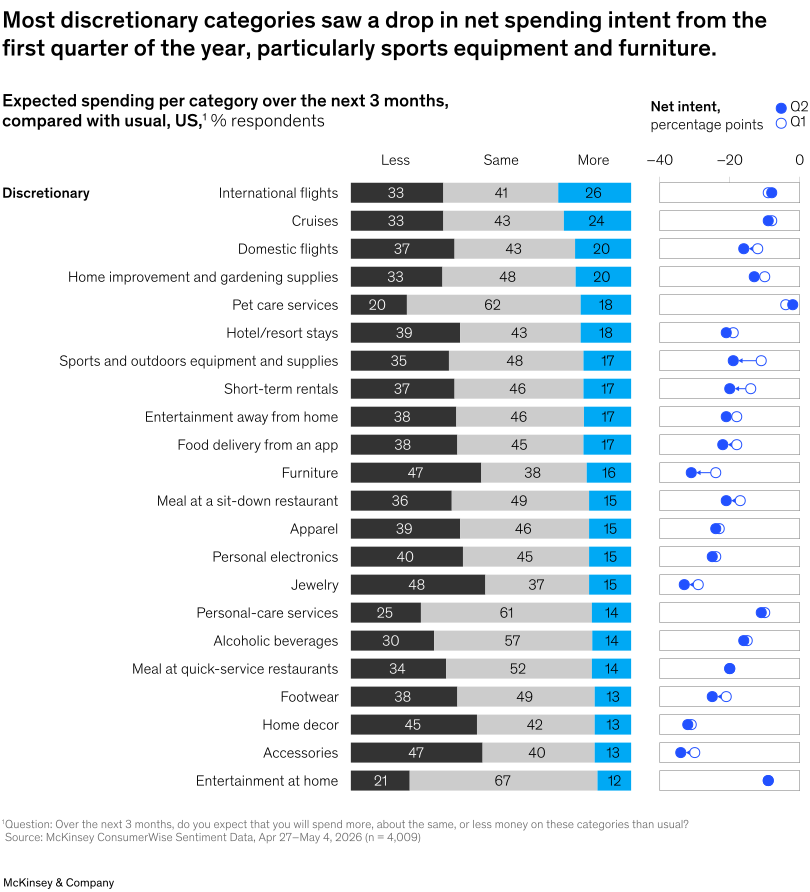
Intent to spend within discretionary categories declined broadly. Big-ticket retail segments could face the greatest pressure. Consumers reported the greatest net negative intent to spend on accessories, jewelry, and home décor, while intent to spend on sports and outdoor equipment, furniture, and short-term apartment rentals dropped the most from the previous quarter. In many of these categories, 40 to 50 percent of consumers said they expect to spend less over the next three months. Across nearly every discretionary category, the share of consumers planning to spend more remains relatively small—generally in the low- to mid-teens.
I’m looking for cheaper alternatives to my usual skin care and makeup. I’m not going to stop using it, but I’m definitely not buying the high-end brands anymore. The drugstore version works just fine.
Consumers across income segments are becoming more cautious, reporting declining optimism and intentions to pull back on discretionary purchases. That could place greater pressure on consumer companies to sharpen pricing architecture, refine promotional precision, and more clearly communicate differentiated value—not only affordability, but also product durability, quality, and relevance. As consumers become more selective in their spending, companies that can tailor assortments, messaging, and value propositions to distinct consumer trade-off behaviors may be better positioned to sustain demand.
In June, we will publish our annual State of the Consumer report, featuring our latest insights into the influential forces shaping consumer behavior, including new consumer shopping pathways, the wellness revolution, the experience economy, and the “resourceful consumer.”
To contact us for more information or to read additional insights, check out our ConsumerWise page.
About the Authors
Christina Adams is a partner in McKinsey’s Dallas office, Kari Alldredge is a partner in the Minneapolis office, and Thomas Kilroy is a senior partner in the Chicago office.
The authors wish to thank Andrew Pitakos, Eitan Urkowitz, Hannah Wagner, and Tom Skiles for their contributions to this article.
This article was edited by Alexandra Mondalek, an editor in the New York office.
An update on US consumer sentiment: Embracing AI-supported shopping
By Christina Adams, Kari Alldredge, and Thomas Kilroy
Consumers’ spending plans aligned with seasonal patterns—but AI’s growing prominence signals a shift in shopping behaviors. Here’s the latest research from our ConsumerWise team.
In the first few weeks of the year, US consumers appeared to settle into a familiar, postholiday rhythm: Their feelings about the economy remained mostly unchanged from the end of 2025. Their reported spending intentions also followed typical seasonal patterns: In essential categories, intent to spend remained largely unchanged, and fewer consumers reported their intent to spend on discretionary goods and services compared with the fourth quarter.
What changed more materially in 2026 so far was not how consumers felt about the economy—but how they gathered product information and made purchase decisions. For the first time, our US ConsumerWise survey explored how consumers are adopting AI (specifically, gen AI) tools for shopping. While millions of US consumers still have not experimented with AI or adopted it into their daily lives, AI is beginning to move from early-adopter stage into the mainstream (the prevalence of AI-related Super Bowl ads this year reflected this shift).
The following charts present insights from our latest ConsumerWise research, exploring how US consumers feel about the economy in early 2026 and how AI is beginning to reshape consumer shopping habits.
US consumers’ economic confidence remained relatively flat in early 2026. Compared with late 2025, a smaller share of respondents reported feeling pessimistic, while a slightly larger share expressed neutral or mixed feelings about the economy. Overall, sentiment in the first few weeks of 2026 mirrored trends observed throughout most of the past year.
Income continued to be the strongest differentiator in economic confidence. On average, the wealthier the consumer, the more optimistic they reported feeling. We also observed some generational differences in sentiment, though these were less pronounced than differences in sentiment by income. Baby boomers had the largest share of pessimistic respondents, followed by Gen X and Gen Z, while millennials had the largest share reporting optimism.
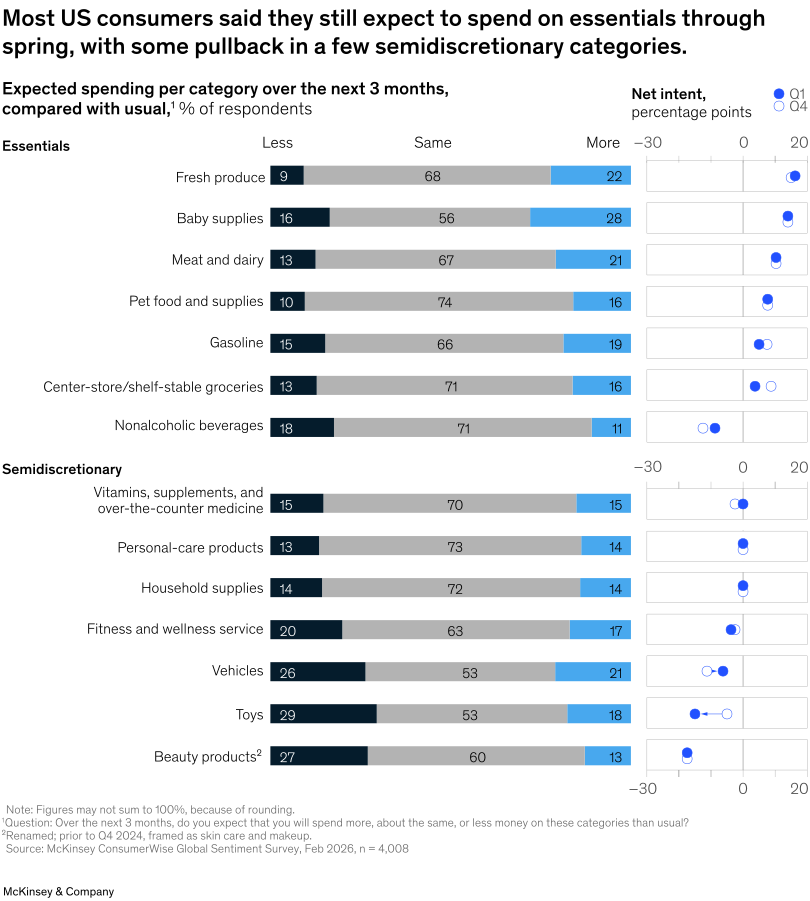
Consumers’ expected spending over the next three months reflected typical first-quarter seasonality. Across essential categories, net spending intent, or the difference between the share of people who intend to spend more on a category and the share of people who intend to spend less, rose for some categories, such as fresh produce. Still, across several categories, net intent remained relatively flat compared with the previous quarter.
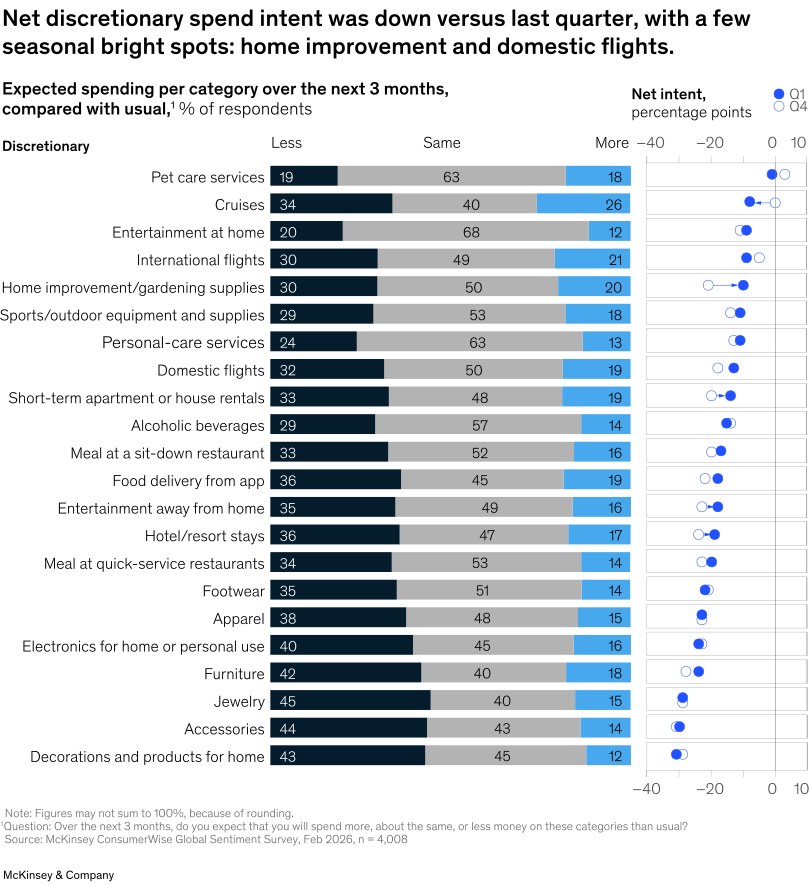
Net intent to spend was negative across all discretionary categories and declined quarter over quarter across several of these categories, consistent with a typical postholiday slowdown. Even so, there were a few seasonal bright spots. Net spend intent rose for home improvement and gardening supplies (up 11 percentage points versus the fourth quarter of 2025) and domestic flights (up five percentage points), with additional gains across several travel- and experience-related categories, including short-term rentals, hotel stays, and entertainment away from home. Overall, the data suggest that consumers are planning to spend selectively rather than pull back on discretionary spending across the board.
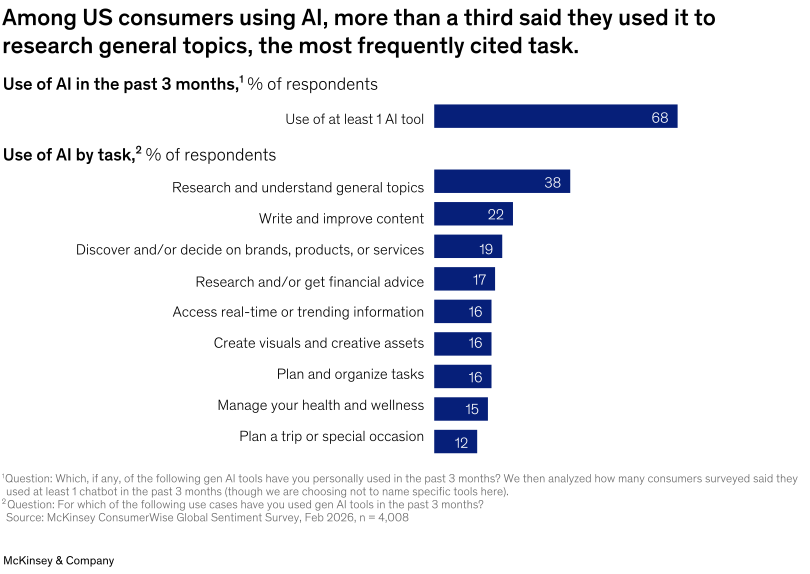
While their spending plans may not have diverged from seasonal patterns, consumers reported they are seeking information—much of which is related to shopping—in new ways. Among US consumers who reported using AI tools, the greatest share (38 percent) said they used AI to research and understand general topics. Consumers also said they use AI to write and improve content (22 percent) and discover or decide on brands, products, or services to purchase (19 percent).
Overall, 68 percent of survey respondents said they had used at least one AI tool in the past three months (likely an underestimate, given that consumers may use AI-based search or AI functionality within apps without realizing they are using AI). Eighty-five percent of Gen Z and millennial consumers reported adopting AI, compared with 70 percent of Gen Xers and 41 percent of baby boomers. We also found that income was the strongest determinant of AI usage: Higher-income consumers were more likely to report using the technology.
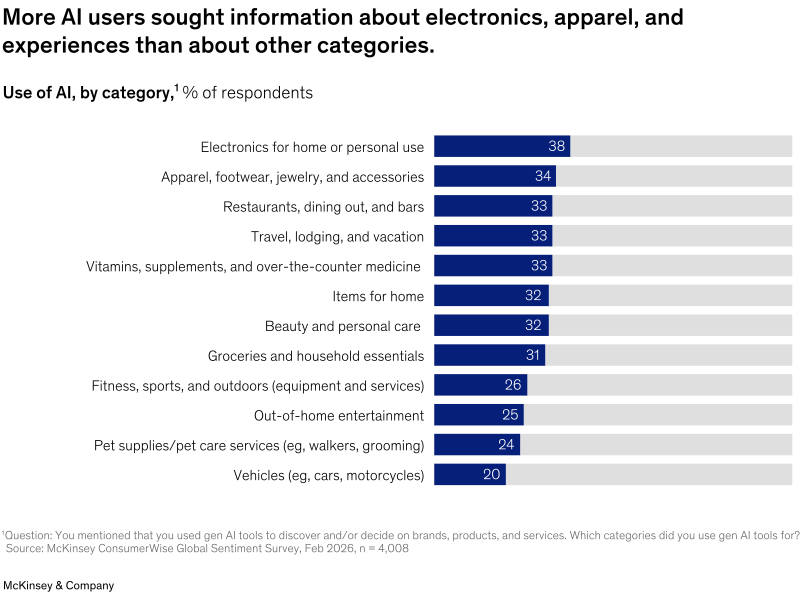
Electronics for home or personal use was the most-cited category for using AI tools to discover or evaluate brands, products, or services. Consumers who used AI to inform their purchases—let’s call them “AI-enabled shoppers”—were nearly twice as likely to do so for electronics as for vehicles. Apparel and experience-related categories, such as restaurants and travel, also ranked relatively high.
Gen Z and millennial AI-enabled shoppers were far more likely than baby boomers to use AI when shopping for fitness and sports products, as well as for beauty and personal care. Younger consumers were also more likely to use AI for groceries and household essentials, suggesting that these shoppers are beginning to consult AI even for routine purchases.
Higher-income consumers were more likely than lower-income consumers to use AI when considering fitness and sports and beauty purchases. By contrast, AI usage for groceries and entertainment purchases did not differ meaningfully by income.
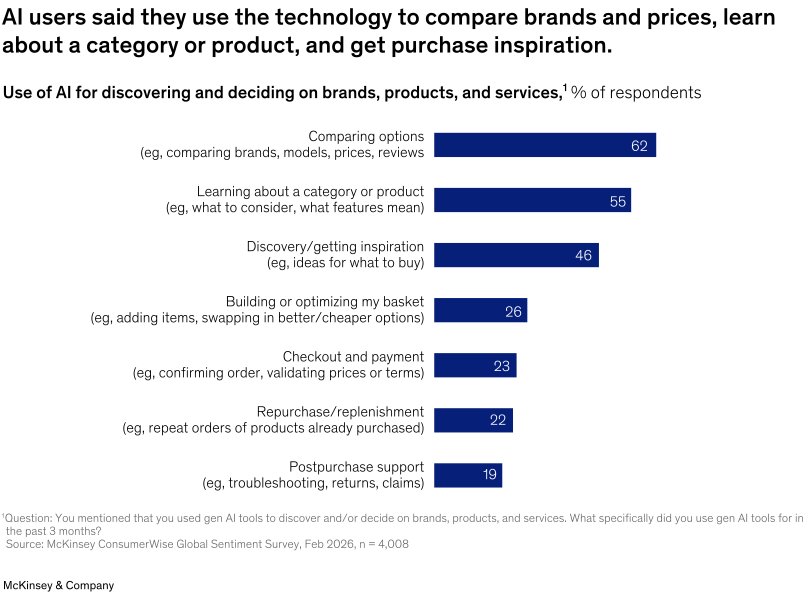
Most of AI-enabled shopper activity centered on the earlier stages of the shopping journey. Sixty-two percent reported using AI to compare options—such as brands, models, prices, and reviews—making it the most common use case. Fifty-five percent said they relied on AI to learn more about a category or product, including what features to consider. Nearly half used it for discovery and inspiration, such as generating ideas for what to buy.
Fewer consumers reported using AI in later stages of the purchase process, such as building or optimizing their basket, checking out, managing repurchases, or seeking postpurchase support. Overall, the findings suggest that consumers use AI primarily for research and decision support rather than transactions or services—for now.
Even so, AI-based search tools are clearly becoming a leading source for decision-making. For consumers surveyed who use AI search, 44 percent said it is their most preferred source of information, ahead of search engines (31 percent), retailer and brand sites (9 percent), and review sites (6 percent). And in AI-generated search summaries, affiliate blogs—websites that earn commissions by promoting third-party products through tracked affiliate links—make up the greatest share of citations (50 percent), equal to the share of citations from user-generated content, academic and market research, brand and retailer sites, and news and media combined, according to data from the digital marketing platform Semrush. This suggests that brands might need to prioritize affiliates in their marketing strategy, even if doing so gives them less direct control over how their products are represented in AI-assisted journeys.
The way US consumers discover and evaluate products is evolving quickly. AI is already embedded in the early stages of the shopping journey—particularly among younger and higher-income consumers—and is beginning to influence both discretionary and routine purchases. As adoption broadens, AI-assisted search and comparison will likely play an increasingly meaningful role in how consumers navigate categories.
For consumer-packaged-goods companies and retailers, the near-term opportunity lies in ensuring their brands appear prominently in AI-assisted research and comparison—across not only owned channels but also the third-party content ecosystems that AI tools frequently draw from. Over time, as consumers become more comfortable using AI throughout the purchase process, companies may also need to rethink their strategies for consideration, basket building, and loyalty in an AI-mediated world. To contact us for more information or to read additional insights, check out our ConsumerWise page.
To see previous ConsumerWise insights, visit our page of 2025 research.
About the Authors
Christina Adams is a partner in McKinsey’s Dallas office, Kari Alldredge is a partner in the Minneapolis office, and Tom Kilroy is a senior partner in the Chicago office.
The authors wish to thank Andrew Pitakos, Eitan Urkowitz, Hannah Wagner, and Tom Skiles for their contributions to this article.
This article was edited by Alexandra Mondalek, an editor in the New York office.